
AgeTech
Let me walk you through my phone. Not in a technical way — I couldn’t do that if I tried. But in a this is what I use and why way, because I suspect a lot of it overlaps with what you might find useful too.
The whole point of this AgeTech series is simple: I want to encourage seniors to adapt technology — not for technology’s sake, but because it adds something real to daily life. It makes things smoother, closer, a little more interesting. And that, in turn, adds zest to joyful living. Technology won’t give you joy. But it can remove enough friction that joy has more room to show up.
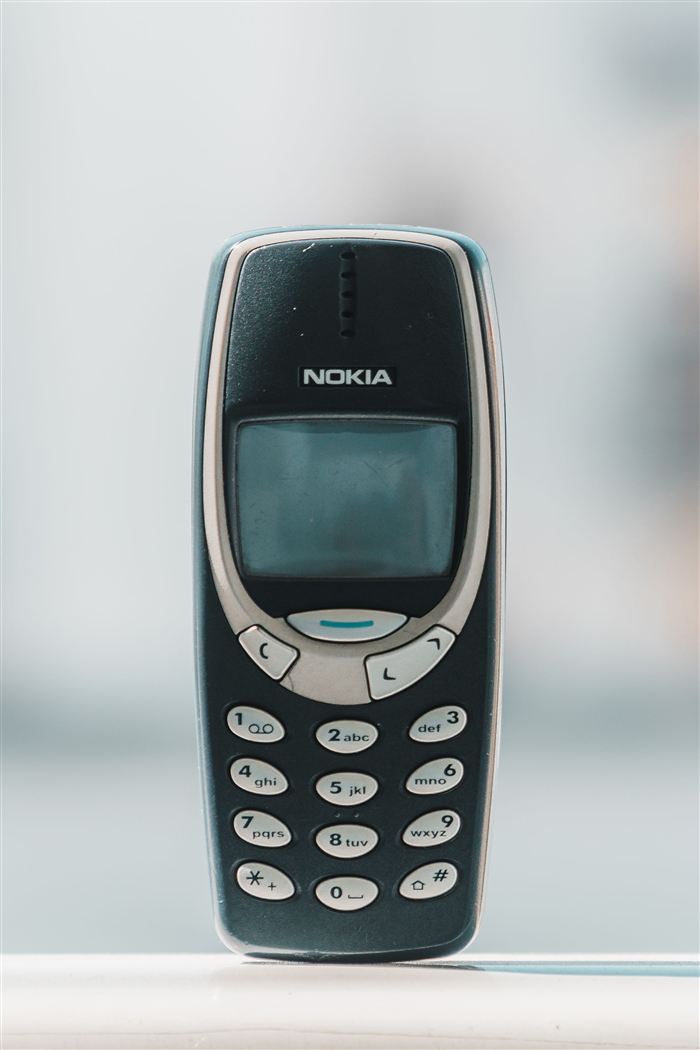
I’m a baby boomer myself. My first phone was a Nokia — that grey brick with the greyscale screen, the one where the only real recreation was a game called Snake. You guided a pixelated line around a tiny screen, eating dots, growing longer until you ran into yourself. That was it. That was entertainment on a phone in the late nineties.
I look at what’s in my hand now — a Samsung Galaxy S25, thinner than a notebook, more powerful than an entire roomful of computers from my working years — and I still find it astonishing. This isn’t just an upgrade. It’s a different category of thing. And the best part is: you don’t need to understand how it works to use it. You just need to press the right button.
So let me open the drawer and show you what’s inside.
The Marvel in Your Hand
First, a moment of wonder.
I was reading somewhere that the first iPhone Steve Jobs introduced in 2007 had more computing power than the spacecraft that guided Neil Armstrong to the moon and back. Think about that. The device in your pocket — the one you use to send good-morning messages and check the weather — is more powerful than the machine that took humanity to another world.
I’m not an Apple user myself. I use a Samsung Galaxy S25. Not because I have strong opinions about operating systems, but because it’s what I’m used to and it does everything I need. The point isn’t the brand. The point is that almost everyone reading this is carrying a device of extraordinary capability — and most of us use maybe ten percent of what it can do.
That’s actually fine. You don’t need to use all of it. You just need to use the parts that make your life better.
Shopping from Home
I use Amazon. I use Lazada. I use Shopee.
Between these three, I can buy almost anything without leaving my chair. A replacement part for the kitchen tap. A book I heard about on a podcast. A birthday gift for my granddaughter that arrives wrapped and on time. The apps remember my address, my payment method, my order history. Two taps and it’s on the way.
Is it as satisfying as walking through a store, touching the fabric, chatting with the shopkeeper? No. Different thing entirely. But on a Tuesday afternoon when you need something specific and don’t feel like navigating traffic and parking, it’s a quiet kind of magic.
Getting Around, Getting Fed
Grab. If you’re in Southeast Asia, you probably already know it. If you’re elsewhere, your local version might be Uber or DiDi or something similar. The idea is the same. You tap a button, a car shows up, you get in, you get out, you pay without touching your wallet. It just works.
I use Grab for short trips when I don’t want to drive. I use it for food delivery when I’m at home and the kitchen feels far away. The app shows me the price before I commit. I watch the driver’s car move toward me on a little map. No haggling. No standing on a corner hoping an empty taxi passes by.
It’s not something I use every day. But when I need it, it’s there — and that’s the whole definition of convenience. Just that you know, this technology, useful as it is, is already dated. It is something from the internet age, and like many things from that era, it’s already being absorbed into something larger — the smartphone age, the connected age, whatever we’re calling this period where the phone in your pocket is less a phone and more a remote control for your life.
Travel, Without the Travel Agent
I book my own flights now. I book my own hotels. I used to call an agent, explain what I wanted, wait for a callback, compare options over the phone. Now I open Trip.com or Booking.com, type in where I want to go, and see every option in front of me — prices, photos, reviews from people who actually stayed there.
The first time I booked a hotel this way, I was nervous. What if it wasn’t real? What if I showed up and they had no record of me? But it worked. And it’s worked every time since. Now the idea of going back to the old way feels like insisting on a horse and cart when there’s a car in the driveway.
Banking Without the Bank
This might be the biggest change of all.
I remember queueing at the bank. Taking a number. Waiting. Filling out a slip. Waiting again. Banking used to be something you had to set aside a morning for.
Now I transfer money while waiting for my coffee. I pay bills with a fingerprint. I check my balance without logging into anything — I just glance at the app. The bank branch near my house has downsized twice in five years. Fewer tellers. Fewer counters. The assumption now is that most of us don’t need to physically be there.
And honestly? Most of us don’t.
The apps are designed so the common things — checking, transferring, paying — are the easiest things. If you can send a WhatsApp message, you can use a banking app. The learning curve is maybe fifteen minutes, and then it’s just… how things work now.
Breaking the Language Barrier
I travel, and I don’t speak the local language everywhere I go. That used to mean phrasebooks, hand gestures, and a lot of smiling and nodding.
Now I open Google Translate. I type what I want to say in English. It shows me the translation — in text, and with a little speaker icon I can press so the person hears it in their own language. They speak back. The app translates it for me.
Is it perfect? No. Sometimes the grammar is a little strange. But it’s good enough to order a meal, ask for directions, explain that I need a taxi to the airport. That, to me, is astonishing. We’re living in a time where a free app in your pocket can bridge a language gap in seconds. That’s not convenience — that’s something closer to a superpower.
The Weather, Before You Step Outside
It sounds small. But I check the weather on my phone every morning now. Not by watching the news and waiting for the weather segment. I open an app — or just glance at the widget on my home screen — and I know: rain at 3pm, humid all day, clear tomorrow morning.
It changes how I plan my day. Should I walk now, before the heat? Do I need an umbrella? Is this a good afternoon to stay in and read? Simple information, but it removes a layer of guesswork from daily life. I’ve come to appreciate that more than I expected to.
Staying Connected Across Time Zones
This one matters to me personally.
My family is spread across different time zones. Without WhatsApp, I’d be sending emails that go unanswered for days, or making expensive international calls that catch people at the wrong time. Instead, I send a voice note when I’m thinking of them. They listen when they wake up. They send one back. We have a conversation that stretches across a day, across an ocean, across the small silences that distance would otherwise create.
Facebook lets me watch my nieces and nephews grow up through photos their parents post. LinkedIn keeps me loosely tethered to former colleagues — people I spent decades working alongside, whose lives I still care about even if we no longer share an office.
Social media has its loud, messy, exhausting side. I’m not blind to that. But used intentionally — keeping up with the people who matter, ignoring the rest — it shrinks the distance between you and the life you’ve built across different places and different seasons.
The News, On Your Terms
I don’t sit down at 8pm to watch the evening news anymore. I can’t remember the last time I did.
Instead, the news comes to me. I’ve curated it — chosen which sources I trust, which topics I want to follow. Telegram delivers breaking updates. X (what used to be Twitter) gives me a stream of what people are talking about right now. I scroll through, read what interests me, skip what doesn’t.
The difference is agency. I’m not being fed a broadcast that someone else assembled. I’m choosing what to read more about and what to let pass. That shift — from passive consumption to active curation — took some getting used to. But now I’d find it hard to go back.
YouTube: The Universal Classroom
I’ve learned more from YouTube in the last five years than I learned in some entire school years. That’s not an exaggeration.
How to fix a leaking tap. How to cook a dish I ate in a restaurant and wanted to recreate. How to use a feature on my phone I didn’t know existed. Guitar tutorials. History documentaries. Lectures from universities I’ll never set foot on. Meditation guides. Travel guides. Book summaries. Interviews with people who died before I was born.
YouTube is a search engine. The second largest in the world, actually — after Google. And it’s visual. You don’t just read how to do something. You watch someone do it, step by step, as many times as you need.
My father would have loved this. He was a man who liked to fix things himself, and he relied on manuals with tiny print and confusing diagrams. If he’d had YouTube, he’d have been unstoppable.
A Word on Security — Not to Scare You, But to Arm You
I need to say this plainly.
Everything we put online leaves a trace. Data in the cloud, they call it — which sounds soft and harmless, but it means your information is sitting on a server somewhere, and servers can be accessed by people you didn’t invite.
The good news: security is being taken more seriously than ever. Banks use encryption. Apps require two-factor authentication. The platforms know that trust is their only real currency, and they’re investing accordingly.
The caution: still be careful about what personal details you share online. Don’t give your NRIC or passport number to a website you don’t trust. Don’t click links in emails from strangers. Don’t assume that because something looks official, it is.
This isn’t about paranoia. It’s about the same kind of common sense you’d use in the physical world. You lock your front door at night. You don’t hand your wallet to a stranger on the street. Digital life asks for the same instincts — just applied in a new environment.
And This Is Only the Beginning
Everything I’ve described — the ride-hailing, the banking apps, the translators, the video calls — all of it belongs to the internet age. That’s the era we’re living in right now, and it’s already mature. What gets me excited is what’s next.
Remember 3G? It felt fast at the time. Then 4G arrived and suddenly we could stream video on our phones without buffering. Now 5G is spreading — faster still, more reliable, connecting not just our phones but our cars, our home appliances, our medical devices. And everyone is already wondering what 6G will bring.
The point isn’t the acronyms. The point is that the ground keeps shifting — and that’s a good thing. Each generation of this technology makes the previous one look slow, and each one opens doors that weren’t there before. The phone in your pocket today is the dumbest it will ever be. Tomorrow’s version will do things we haven’t thought to ask for yet.
None of this requires you to be an engineer. Just as you didn’t need to understand 3G to send a text or 4G to make a video call, you won’t need to understand 6G to benefit from whatever it unlocks. The technology does the complicated part. You just keep pressing the button — and the button keeps getting smarter.
The Switch Is Right There
None of these tools require you to be technical. None of them ask you to understand code, or hardware, or the architecture of the internet. They just ask you to press the right button — and most of them make the right button very easy to find.
I don’t use all of these every day. Some I use once a week. Some once a month. Some only when I travel. But each one has made some small part of my life smoother, faster, or more connected.
And that’s the thing about technology, in the end. It’s not about the technology at all. It’s about what it lets you do: stay close to the people you love, go places you want to see, learn things you’re curious about, spend less time on the boring stuff and more time on what actually matters.
Try one app this week that you haven’t used before. Just one. The banking app. The translator. The weather widget. One tap. See what happens.
If you’re curious where to go from here, I put together a free guide — a simple place to begin.
Get the Free Guide — The 5 Keys to Retirement Happiness →Then come back and tell me how it went.
Keep well,
Farook
Take this with you
AgeTech Starter Cards
Six small cards that make your phone a friendlier tool — no jargon, no cheerleading.
Download the free PDF →Stay a little longer
You Don’t Need to Understand Electrons to Turn On a Lightbulb
I was in a Grab car last week, and the driver — a man in his late sixties — told me his daughter taught him the app. He’s not a tech person. But he figured out the one button that matters.
The kettle question
“What’s the one thing your phone does that genuinely makes your day easier?”
The comment box is just below — I read every one.
Leave a Reply