Category: Joyful Living

The deliberate practice of joy

  • The Da Vinci Secret to Joyful Living in Retirement (Everything Connects)

    The Da Vinci Secret to Joyful Living in Retirement (Everything Connects)

    *Blog post — BeHappyRetired.com | Pillar: Joyful Living | ~1,700 words*

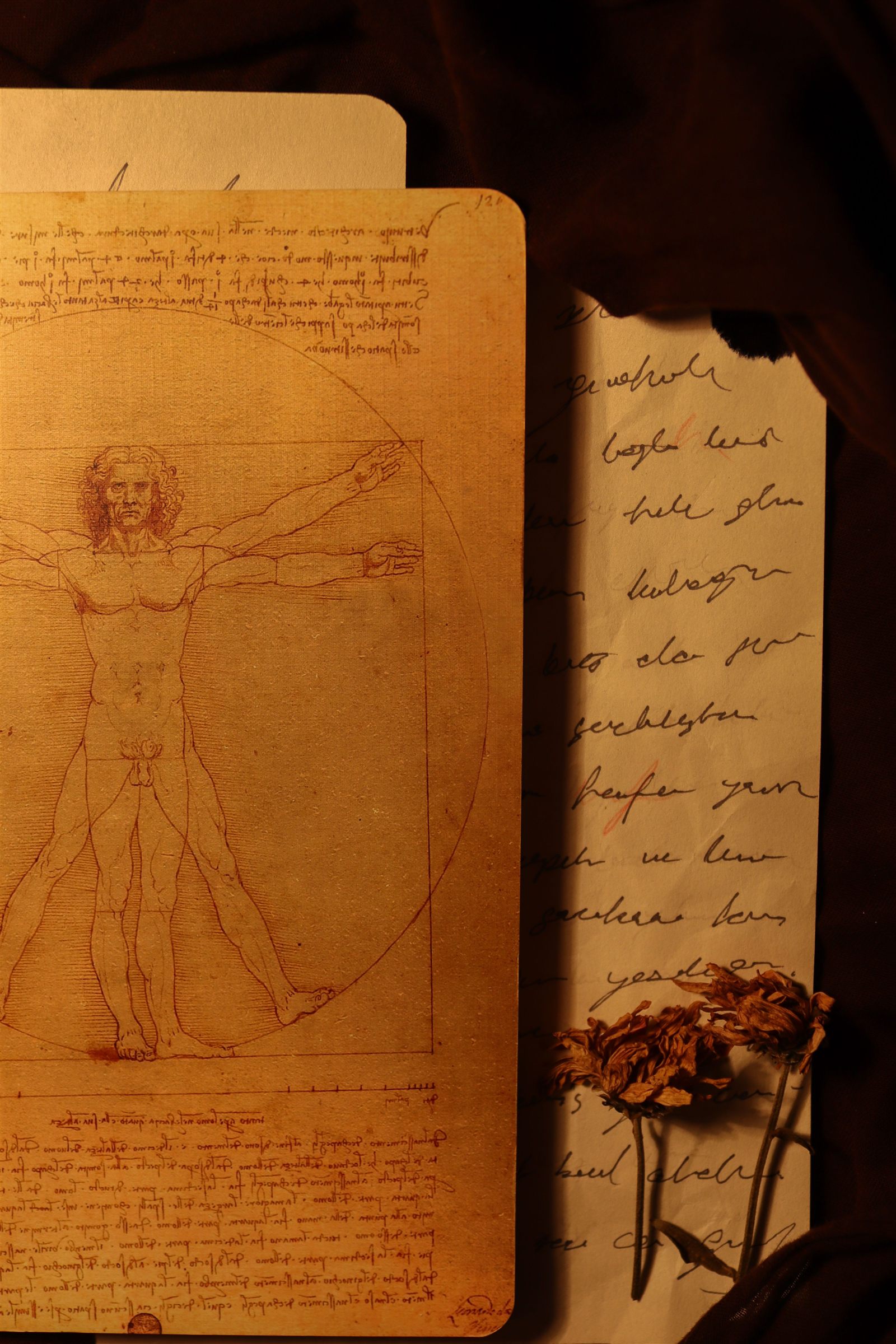
    Leonardo da Vinci had a word for it: *connessione*. The understanding that everything connects to everything else. He used it to describe how he thought about his work — the machines, the paintings, the anatomy studies, the architecture. Nothing existed in isolation. Pull one thread and you’d feel the whole web move.

    I didn’t think much about da Vinci until this past year. But I’ve come to believe his concept of connessione is one of the most practical guides to joyful living after 60 that I’ve come across — even if he never intended it that way. Retirement gives you strange gifts, and one of them is time to notice things that were always there.

    This morning, I was making breakfast and watching the steam rise from our coffee cups. My wife was still getting ready for work. I was thinking loosely about my day — the morning walk, the blog post I wanted to finish, a call to my daughter. And it suddenly struck me that none of those things existed in isolation. They were all pulling on the same web.

    Da Vinci would have understood immediately. I was only just catching up.

    What My Morning Walk Is Actually Doing

    For the first few months of retirement, I thought of my morning walk as exercise. A thing I did so I wouldn’t feel guilty about sitting at a desk all day. Get the steps in. Keep the doctor happy. Fine.

    But lately I’ve started paying closer attention to what’s actually happening on that walk through Vung Tau.

    Yes, my body is moving. But I’m also watching the light change over the rooftops. I’m noticing the rhythm of this Vietnamese street — who’s up early, who’s already at the coffee stall, what the morning smells like before the heat arrives. I have a running conversation with Hoa, my neighbour, about her garden and mine, a conversation that started as small talk and has slowly, without either of us quite planning it, become something I look forward to. Binh from a few doors down and I now walk together some mornings. We talk about things that don’t come up in normal conversation — family, getting older, what we thought this stage of life would feel like versus what it actually does.

    That single walk touches everything. Physical health, yes. But also mental clarity, emotional steadiness, a sense of connection, and something harder to name — a feeling of being properly placed in a morning, in a neighbourhood, in a life.

    I used to separate these things in my head. Exercise was exercise. Social was social. Thinking was thinking. I kept them in different columns the way I used to keep different departments in different silos.

    The walk doesn’t know about my columns. It just does all of it at once, quietly, every morning, whether I notice or not.

    This is connessione. One thread touches all the others.

    The Banana Cake Lesson

    A few months ago, I decided to make banana cake. It was a practical decision — overripe bananas, no desire to waste them. I found a blender method that required no kneading (this is important; I have no patience for kneading). Mixed it, baked it, watched it turn golden.

    What I didn’t expect was how much else was happening.

    There was the satisfaction of making something with my hands after forty years of making things with my mind. Not writing a report or solving a problem or presenting a strategy — actually making a physical thing that didn’t exist before I started. I had forgotten what that felt like.

    There was the connection to memory — my mother used to bake, and the smell of something in the oven does something to me that I can’t entirely explain. It’s not nostalgia exactly. It’s more like a door opening onto a version of myself I’d almost misplaced.

    And then there was the pleasure of bringing a slice to Hoa next door, who’d been unwell. Which led to a longer conversation than I expected. Which left me feeling more connected to where I live, to this street, to the particular life I’ve built here in Vietnam — which is still sometimes surprising to me, in the best way.

    I made banana cake. And somehow that touched creativity, memory, generosity, and community — all at once, without planning any of it.

    I’ve since made it approximately fourteen times. My wife remains politely enthusiastic. I remain genuinely satisfied. The connections keep revealing themselves.

    The Mind and Body Conversation I Kept Interrupting

    For most of my working life, I treated my mind and body as two separate departments. My body was logistics — sleep, eat, exercise, repeat, don’t let it break down. My mind was operations — think, decide, execute, repeat. They ran in parallel but not really together.

    Retirement has made that division impossible to maintain.

    When I sit down to write and the words won’t come, I’ve learned to get up and walk around. Not to think about writing — just to move. Nine times out of ten, I come back to the desk and the words are there, as if they needed my body to be in motion before they would flow. I don’t fully understand the mechanism. I just know it works.

    When I’m anxious about something — and retirement brings its own quiet anxieties, the absence of structure, the uncertainty about purpose, the occasional morning when the calendar’s blankness feels less like freedom and more like accusation — I notice it in my shoulders before I notice it in my thoughts. My body knows first. If I sit still and breathe slowly, my mind follows. If I stay still too long in the wrong way, my mind tightens.

    They are not two departments. They are one conversation. I was just always interrupting it.

    Forty years of interrupting it, it turns out. The career gave me every reason to stay in my head. The body was something to be managed, not listened to. Retirement is slowly reversing that, and I find myself genuinely surprised by what the body has been trying to say.

    [INTERNAL LINK: /free-guide] — *If you’re looking for a practical starting point for joyful living after 60, my free guide covers some of these ideas in more depth.*

    What’s Actually Happening at the Breakfast Table

    My wife still works. Which means our mornings have a particular rhythm — she’s moving, I’m making, we have maybe forty minutes before she needs to leave. I used to experience that as a constraint. A small window. Not enough time to do anything meaningful.

    Now I see it differently.

    That window is one of the most connected parts of my day. Not connected in a productive sense — we’re not solving problems or planning anything. But we’re actually talking, actually listening. Without the evening tiredness, without the weekend busyness. Just the morning, and coffee, and whatever’s on her mind or mine.

    The quality of that time affects everything that follows. When we’re genuinely connected in the morning, I’m steadier for the rest of the day. I’m more patient with small frustrations. I write better. I walk better. I’m better company for Hoa and Binh on the morning street.

    One breakfast table ripples outward all day. Da Vinci would have found this completely unsurprising.

    Learning to See the Web

    What I’m slowly understanding is that retirement isn’t a single thing. It’s not leisure, or purposelessness, or freedom, or loss — it’s all of those things woven together, pulling on each other constantly.

    The joy I’m finding isn’t coming from any one source. It’s coming from noticing the connections. The walk that becomes a friendship. The cake that becomes a memory. The breakfast that becomes the foundation for a good day. The blog post that becomes a conversation with someone I’ve never met but who felt the same way.

    Everything connects to everything else.

    I spent forty years in systems thinking — engineering, operations, management. I understood connessione intellectually. I had diagrams for it. I could explain it to a room. The interconnected nature of complex systems, how you can’t change one variable without affecting the others — this was genuinely my work for decades.

    I just never applied it to my own life.

    That, perhaps, is the real gift of slowing down. You finally have time to see the web you’re already living inside. And once you see it, you can’t quite unsee it. The morning walk isn’t just exercise. The cake isn’t just cake. The breakfast isn’t just breakfast.

    They are all the same thing, approached from different angles.

    I’m still discovering what this means in practice — which is probably how it should be. If I’d figured it all out at the start, there would be nothing left to notice. And the noticing, I’m realising, is the point.

    Da Vinci spent his whole life noticing. He just had the good sense to write it down.

    *What connections have surprised you in this season of life? I’d genuinely love to hear. Come find me at [BeHappyRetired.com](https://behappyretired.com).*

  • When Did I Decide I Was Too Old to Learn New Things? (A Retiree’s Honest Answer)

    When Did I Decide I Was Too Old to Learn New Things? (A Retiree’s Honest Answer)

    *Blog post — BeHappyRetired.com | Pillar: Joyful Living | ~1,650 words*

    A few weeks ago, my neighbour — a 72-year-old woman who had been muttering darkly about smartphones for months — knocked on my door to show me something.

    She had taken a photo of her garden, edited it on her phone, turned it into a short video, and sent it to her grandchildren in Australia. All in one morning. Three weeks earlier, she had been ready to throw the phone into the South China Sea.

    I asked what changed. She smiled and said, “I decided to get curious instead of feeling stupid.”

    I laughed. And then I stood there for a moment longer than I should have, because her words had just landed somewhere uncomfortable. Learning new things in retirement — really committing to it, embracing the beginner feeling — was something I’d been quietly avoiding without ever admitting it.

    When did I decide I was too old to learn new things?

    I couldn’t answer that. But I knew I had decided it, somewhere along the way — quietly, without noticing, the way you acquire an opinion you never chose. I had started approaching unfamiliar things with wariness instead of wonder. New technology. New ideas. New directions. All met with a kind of cautious scepticism that I’d been mistaking for wisdom.

    It wasn’t wisdom. It was just the habit of someone who’d been winning at one game for so long he’d forgotten there were other games to play.

    What I Thought I Knew About My Aging Brain

    I had this picture in my head: my brain was like a filing cabinet that was getting full. Drawers harder to open, files harder to find. Processing slowing down. The hardware wearing out.

    Turns out that’s not really how brains work.

    I’ve been reading about neuroplasticity — which simply means the brain keeps changing and growing throughout your life. We can form new connections, develop new skills, and keep learning well into our eighties and beyond. The speed changes, yes. But slower doesn’t mean worse. It often means more thorough.

    When I was younger, I skimmed information the way I skimmed emails — looking for what I needed and moving on. Now I actually sit with something until I understand it. I read a paragraph and think about it. I go back and read it again. That used to feel like a deficiency. Now I think it might actually be a better way to learn.

    I also have something I didn’t have at thirty: a lifetime of experience to connect new things to. When I read about history, I’ve lived through some of it. When I explore psychology, I have forty years of relationships and organisations to draw from. New information has so much more to attach itself to now. The library is bigger and the connections are richer.

    My neighbour with the smartphone — she didn’t need to slow down. She needed to decide that curiosity was worth more than her dignity. That one decision changed everything.

    The Unexpected Freedom of Learning With No Stakes

    Here’s what nobody told me about learning in retirement: it’s completely different when there’s nothing to prove.

    No grades. No performance reviews. No one watching. I can learn something purely because I find it interesting, follow a tangent purely because it caught my attention, and stop when I’m satisfied rather than when the course is finished.

    Last month I decided to learn about astronomy. Not because I needed it. Not because it was practical. Because I stepped outside one evening in Vung Tau and realised I had no idea what I was looking at.

    I spent hours reading. Watched videos. Eventually bought a small, embarrassingly basic telescope — the kind a 12-year-old might receive as a birthday gift. The first time I identified a constellation on my own, I felt — I’m not exaggerating — like a child who had found buried treasure. Nobody knew. Nobody cared. It didn’t matter to anyone but me.

    That’s exactly why it felt so good.

    There is something almost physical about the absence of stakes. The shoulders drop. The inner critic, who spent forty years auditing every professional move, goes very quiet. And in that quiet, something opens up that I don’t have a better word for than joy.

    What I’ve Been Trying

    I’ve been experimenting, mostly by following my own curiosity and seeing where it goes.

    I started photography because I was sorting through old family photos and wanted to understand why some of them felt alive and others felt flat. That curiosity led me to study composition, then light, then my grandfather’s old camera. Three months later I’m shooting pictures of the Vung Tau streets at dawn and actually understanding what I’m doing.

    I started exploring the history of jazz because I kept hearing songs I loved and realising I had no idea where they came from. Now I can hear a song and place it, roughly, in its era. It changed how I listen.

    I’ve also tried things that haven’t worked. I attempted bread-baking after watching a video that made it look effortless. My first loaf was so dense it could have been used as a doorstop. I laughed, ate a slice anyway out of stubbornness, and tried again. The second loaf was only slightly better. I consider this progress.

    The difference now is that failure doesn’t discourage me the way it used to. When I was working, failing at something felt like it meant something about me — a verdict on my capability, my judgment, my worth to the organisation. Now it’s just data. Try again. Adjust. Try differently. That shift has made the whole business of learning feel lighter and, honestly, more fun.

    [INTERNAL LINK: /free-guide] — *If you’re looking for a gentle way to start exploring new interests in retirement, my free guide has some ideas worth trying.*

    Learning Together Is Better Than Learning Alone

    One thing I didn’t expect: learning alongside other people is genuinely fun.

    I joined a small photography group at a community centre here. We are all, without exception, beginners. Nobody is the expert. We share what we’re figuring out, celebrate when someone gets a shot they’re proud of, and are honest about our mistakes. It is one of the best hours of my week.

    There’s something freeing about being in a room where everyone is trying to figure something out together. The pressure to appear competent disappears. What’s left is just curiosity and company, which turns out to be a very enjoyable combination.

    Online learning has also surprised me. I was sceptical — it felt like it couldn’t be real learning, just screens and videos at a distance. But being able to pause, rewind, think, and come back the next day without losing my place has been genuinely useful. It’s patient in a way that classrooms never quite were. It waits for you.

    The Question I Keep Coming Back To

    Here’s something I’ve been wondering about since my neighbour knocked on my door.

    At some point in our working lives, most of us stopped being beginners. We became the people who knew things. Who were consulted, not taught. Who led meetings rather than sitting at the back, unsure. That’s a real achievement. But it comes with a cost I don’t think we always notice — we quietly stop tolerating not knowing. The discomfort of being a beginner, which children feel every single day without much fuss, becomes something to avoid.

    My neighbour didn’t let herself avoid it. She sat with the discomfort long enough to get through to the other side.

    What I’m discovering is that the willingness to be a beginner — genuinely, uncomfortably a beginner — is one of the most useful things you can bring to this season of life. Not because it makes you productive. Not because it builds skills or adds value or looks good anywhere. But because it keeps you alive to the world in a way that the alternative doesn’t.

    The alternative, I’ve seen in people I know, is a kind of slow contraction. The world gets smaller. The new is kept at arm’s length. You become the expert on what was, rather than a curious student of what is.

    I don’t want that. I’m not sure any of us do, when we’re honest about it.

    What My Neighbour Actually Taught Me

    When she knocked on my door with that video, she wasn’t showing me a smartphone trick. She was showing me a choice she had made: curiosity over comfort, effort over ease, willingness to feel foolish in service of something she wanted.

    That’s the real skill. Not photography or astronomy or bread-baking. The skill is staying open. Keeping the door ajar for things you don’t know yet. Remaining the kind of person to whom new things can still happen.

    I’m still practicing. Some days I feel it more than others. But I notice that the days I try something new — even something small, even something that doesn’t work — are almost always better days than the ones I don’t.

    My neighbour decided curiosity was worth more than her dignity. I think she was right. I think it might be one of the most important decisions any of us can make in this season.

    And if your filing cabinet is full — good. That just means there’s more for the new things to connect to.

    *What are you learning right now — or what have you been putting off? I’d love to hear. Come find me at [BeHappyRetired.com](https://behappyretired.com).*

  • The Warm Tofu Saturday — Finding Joy in Retirement’s Small Moments

    The Warm Tofu Saturday — Finding Joy in Retirement’s Small Moments

    Content Pillar: Joyful Living
    Status: PENDING — Awaiting Nova SEO pass, then Farook approval
    Blake re-tone: 2026-05-24
    Word count target: 1,500–1,800 words
    Original draft: E:\CCWS\PROJECTS\BHRC\content\drafts\2026-05-02-the-warm-tofu-saturday.md

    It was a cloudy Saturday morning in Vung Tau. Joyful living in retirement, I’m learning, rarely looks the way I expected — and this morning was a perfect example of that.

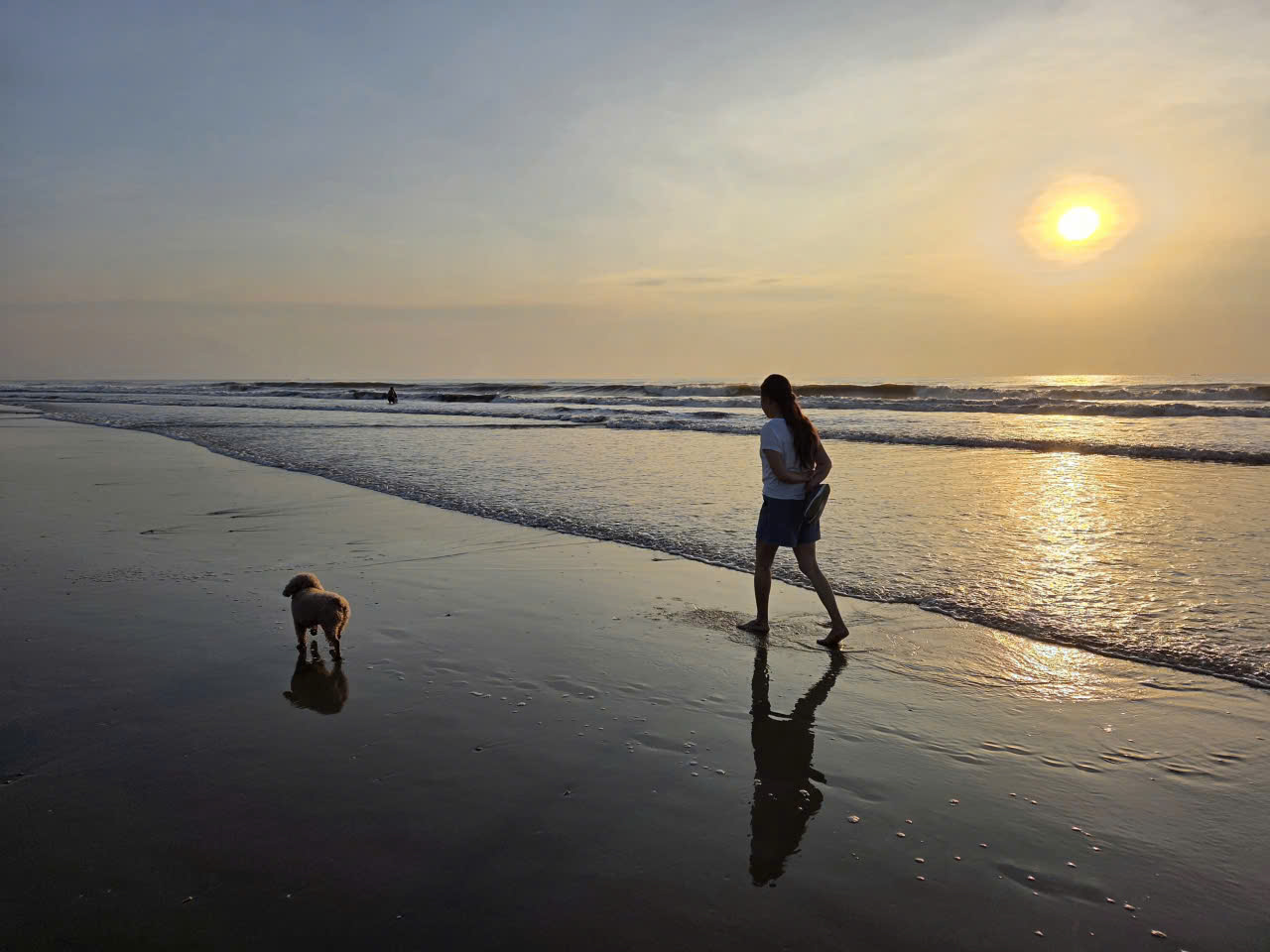
    Cool, with that particular saltiness in the air that tells you the sea is close before you’ve seen it. Hau and I headed out early to Back Beach with Rieu — our poodle. His full name is Bun Rieu, after the Vietnamese crab noodle soup. Which tells you something about how we make decisions in our house.

    He knew where we were going before we did.

    What a crowded beach taught me about being present

    Back Beach was already busy. Holiday weekend, out-of-towners everywhere — families, children who’d been awake since five, umbrellas going up across the sand. That particular buzz of people who’ve been looking forward to something and have finally arrived at it.

    We had had a week. I won’t go into it. You probably know the kind — the kind where small things pile up and by Thursday you can feel it sitting on your chest. Nothing dramatic. Just weight.

    I’ve come to notice that weight more clearly in retirement than I ever did before. When I was working, I pushed through. There was always the next thing, the next meeting, the next problem to solve, and the body’s complaints got filed somewhere in a drawer marked *later*. Retirement opened that drawer. And now I find I can’t quite ignore what’s inside it.

    Which means — and this surprised me — I’ve had to get better at knowing what actually helps.

    We took our shoes off at the edge of the sand. I always do on a beach. There’s something about bare feet on natural ground, something the body quietly appreciates. Whether that’s what the earthing people are right about, or just the simple physics of cool sand between the toes, I’ve stopped needing to know. Some things don’t need an explanation. They just need to be done.

    Rieu hit the water without breaking stride. Hau and I watched him dart between people’s legs across the wet sand — small, white, absolutely certain this whole beach belonged to him personally. There was something quietly delightful about watching a creature so completely at home in a moment. No past, no future, just this particular stretch of wet sand on this particular Saturday morning.

    I find myself studying Rieu more than I used to. Not in a sentimental way. More in the way you study someone who is naturally good at something you’re still learning. He doesn’t decide to be present. He just is. The rest of us have to work at it.

    We kept an eye on him the way you do with a small dog on a crowded beach — that half-attention that looks casual but isn’t. He darted. We tracked. The sea did what it always does — rolled in and rolled back, entirely unbothered by any of us.

    The kind of joy that arrives without announcement

    I’ve been thinking lately about what joy actually requires.

    Not the big-occasion kind — that’s straightforward enough. Birthdays, reunions, the long-anticipated trip finally taken. That kind of joy has a clear address. You know where to find it.

    It’s the other kind I’m interested in. The kind that shows up on an unremarkable morning. The kind that doesn’t announce itself but arrives quietly and only makes itself known when you’re already inside it. The kind that you might miss entirely if you’re moving too fast or looking too hard in the wrong direction.

    I spent most of my working life moving too fast. Efficient, purposeful, forward-facing — all the things that served me well in a manufacturing context. And then retirement arrived and I discovered that efficiency is a poor tool for noticing. You can’t rush your way to a moment. It just dissolves.

    I’m still learning how to slow down enough. Some days I manage it. Other days I catch myself planning the next thing while the current thing is still happening — mentally composing the afternoon while the morning is still unfolding in front of me, perfectly good and entirely unattended.

    There’s a particular kind of loneliness in being physically present but mentally elsewhere. I know that feeling. I spent years cultivating it without realising it was a loss.

    But the days when I actually arrive — when I put down the future and pick up the present — those are the days that feel most like living. Not the productive days, necessarily. Not the days when I got the most done. The days when I was actually there for what was happening.

    [INTERNAL LINK: /free-guide] — *If slowing down and noticing more is something you’re working on, I put together a short guide on finding joy in retirement’s small moments. It’s free.*

    The warm bowl and the familiar uncle

    On the way back along the waterfront we stopped at an uncle’s stall.

    We see him often enough that no words were needed. Just the nod. A small, easy thing — the kind of wordless recognition between people who share a neighbourhood, a rhythm, a habit. I don’t take those small recognitions for granted anymore. They are their own kind of connection.

    Two warm bowls of curd tofu, silken and just sweet enough. We stood right at the water’s edge to eat them. The air there always feels different — cleaner, the kind that makes you breathe a little deeper without noticing you’re doing it.

    Warm bowl in both hands. Salt in the air. Rieu still darting somewhere between us and the sea.

    I thought: this is it. This is the thing.

    Not a thought I said aloud. Just a quiet internal noting, the kind you make when something lands. This exact combination — the particular temperature of the bowl, the particular quality of the light, Hau beside me, Rieu somewhere in front — this was what I had needed without knowing how to ask for it.

    That’s the texture of joyful living, I think, in this season. It rarely arrives in the form you planned. It arrives in the form of a cloudy Saturday before the heat comes through, and a familiar uncle who hands you a bowl without needing to ask.

    The week loosened its grip somewhere in there. I only noticed after. The way you notice when a headache lifts — not at the moment it goes, but a few minutes later when you realise your shoulders have dropped.

    That particular relief — the retroactive noticing — has taught me something. Joy doesn’t usually announce its arrival. It just settles, quietly, and you find yourself on the other side of whatever was weighing on you without quite knowing when you crossed.

    I used to think you had to pursue happiness. That it was a destination with a clear route. I’m less sure about that now. I think — I’m still figuring this out — that what you actually do is put yourself in the conditions for it to show up. You go to the beach. You take your shoes off. You stand at the water’s edge with a warm bowl and the person you love and a ridiculous, delighted dog.

    And then you let the rest of it do what it does.

    Then Hau said she was getting too hot. And honestly, it was — the cloud burning off, the sun finding its way through, the morning beginning to tip toward the heavy warmth of the day.

    We hadn’t been there long. Not as long as I’d have liked. Rieu wasn’t ready either, visibly so — that low-level protest of a dog who has not finished investigating.

    But that was that.

    We finished the tofu, called Rieu away from whatever he was investigating (he took a moment to register the suggestion), and turned for home.

    A perfect morning would have lasted longer. A perfect morning would have been cooler, and longer, and perhaps with no urgency waiting on the other side of it. But we don’t get perfect mornings. We get real ones.

    And we got the important parts. The bare feet on the sand. The warm bowl. The familiar uncle. The dog who was — without question, without complication — completely happy.

    Why the small moments matter most

    I’ve been writing this down because I want to remember it. Not just the morning, but what it points to.

    Because there will be more weeks like the one that preceded it. More Thursdays with weight on the chest. More quiet accumulations of small frustrations that don’t rise to the level of a proper complaint but still, quietly, drain things.

    And when those weeks come, I want to remember that the remedy isn’t grand. It isn’t a trip, or a plan, or an intervention. Sometimes it’s just: put on the shoes you’re about to take off. Go to the beach. Find the uncle with the tofu.

    Notice what’s in front of you.

    Sometimes that is enough. I’d even say — sometimes that is everything.

    *What’s your version of the warm tofu Saturday? I find myself curious about the small things that restore other people — the specific, unremarkable moments that somehow hold a whole week together. If something comes to mind, I’d genuinely love to hear it in the comments.*