
Emotional Wellness
I was a weekend husband for the better part of my career.
Different companies, different countries — but the ritual never changed. I’d be gone Monday to Friday. Hau built her life around my absences. Her work, her friends, her rhythms. We’d reunite on weekends, catch up, do the things couples do. Then Monday morning, I’d leave again. For years, this was normal. Hau tolerated it. I’m not sure “understanding” is the right word — but she tolerated it.
The Vietnam role made it harder. Frequent travel, sometimes at short notice. Regular trips to headquarters in Europe. Customer dinners that stretched late. Colleagues across time zones meant evenings were never fully mine. I was present nowhere — not completely at work, not completely at home.
I tell you this not to complain. I loved the work. But I want you to understand where I’m coming from. For decades, my marriage operated on a part-time schedule. Retirement changed that overnight.
The first few months were gentle. We slept in. Long breakfasts. Walks along the seafront. It felt like making up for lost time, and in a way it was.
Then the newness faded. Not into conflict — into something quieter. A polite negotiation over space and time that neither of us knew how to name.
Hau still works. Every morning she leaves at 7:30. I stay. Coffee. Bun Rieu. Writing. Reading. By evening, I’ve had a full day of solitude. She’s had a full day of people. We sit down to dinner and I want to talk — I’ve been quiet all day. She wants quiet — she’s been talking all day. That mismatch sounds small. Day after day, it adds up.
And then there is the to-do list. Which is where I must, gently, invoke the old saying: men are from Mars, women from Venus.
I approach a list like a production schedule. Item one. Item two. Done. Move on. Satisfaction comes from the crossing out. Hau approaches the same list as a living document — subject to reordering, reinterpretation, and the sudden arrival of new items that somehow take priority over everything I just crossed out.
Last week: “The kitchen cabinet hinge is loose.” I found the screwdriver. Three minutes. Done. I reported back with the quiet pride of a man who has completed a task.
“While you’re there, the drawer handle is a little loose too.”
The drawer handle was not on the list. The list had one item. And yet.
I fixed it. And the second one. And then I tightened the third one just in case, because by that point I had accepted the Venusian way.
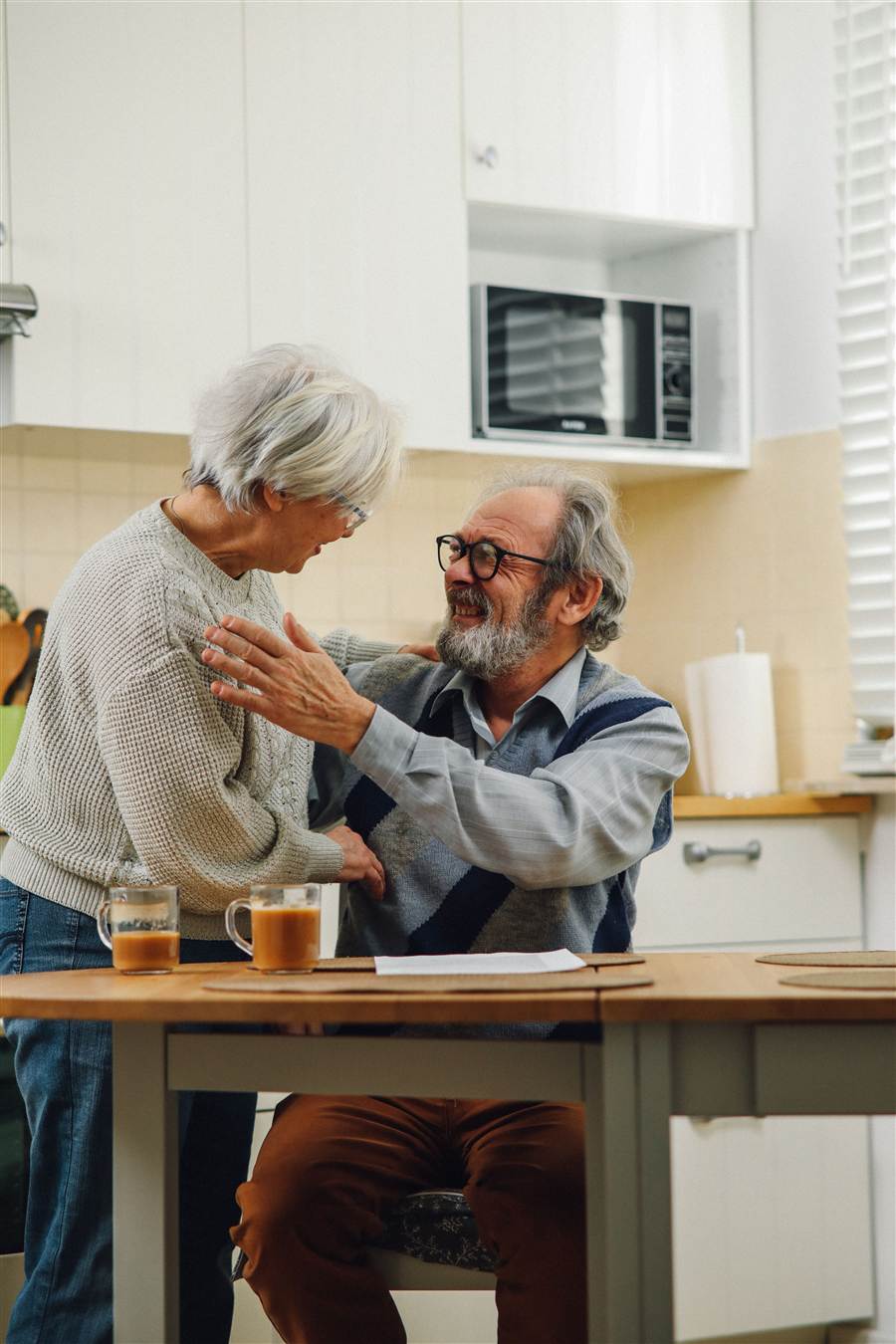
This is not a complaint. I’ve learned that her approach is not wrong — it’s different. She sees the house as a whole. I see it as a series of problems. Neither is right. Both are occasionally exasperating. It does get better. I’ve learned to expect the second item. She’s learned to give me the first with a little smile that says “there may be more.” We’re meeting somewhere in the middle — in a kitchen in Vung Tau, three drawer handles tightened, two people still learning how to share the same air.
Retirement reveals things. When I was travelling, our time was scarce. Scarcity made it precious — we didn’t waste weekends on small disagreements because there wasn’t time. The compression hid a lot.
Now there’s no compression. Just time. And in that time, small things surface. The dishes. The air conditioner temperature. Background music versus silence. Not problems. Just friction. The ordinary friction of two people in the same space for more hours than ever before.
About three months in, Hau said something I’ve never forgotten.
“You’ve been home for three months. I’m still waiting for you to arrive.”
She wasn’t being harsh. She was being honest. And she was right. I was physically present — in the kitchen, on the sofa, in the bed — but some part of me was still a visitor. A weekend guest who’d overstayed. I hadn’t fully moved into my own home, into my own marriage.
That shifted something. I started taking on the small things Hau had managed alone for years. The morning market run. The bills. Bun Rieu’s vet appointments. Not because she asked. Because I finally noticed they existed.
I should tell you something I don’t often share.
My first marriage ended while I was working in Malaysia, more than ten years ago. I was doing what I thought I was supposed to do — providing, building a career, putting food on the table. I told myself the absence was necessary. Temporary. That we’d make up for it later.
Later never came.
I won’t dissect that marriage here. But I’ll say this: we can never take relationships for granted. The old saying about absence making the heart grow fonder — that’s a best-case scenario. What absence actually does, more often than not, is create distance. Distance becomes a gap. Gaps are hard to close.
That knowledge sits with me now. It makes me pay attention in ways I didn’t before.
And then there are the children. They grow up fast — faster than any career timeline. I was there for the milestones. The birthdays. The school events. What I missed were the ordinary days. The Tuesday afternoons. The dinner table conversations about nothing in particular that somehow became the memories holding everything together. You don’t get those back.
I’m not saying this to make anyone feel guilty. I’m saying it because nobody told me. Or maybe they did and I wasn’t listening. The career takes everything you give it and asks for more. The relationships wait. But only for so long.
I haven’t figured out marriage in retirement. Some days Hau and I are genuinely connected — morning eggs, easy conversation, the quiet comfort of someone who knows all your stories. Other days we orbit each other like separate planets.
What I am learning is that relationships don’t run on autopilot. Not marriage. Not the bond with your children. They need attention — the deliberate, daily kind. Not grand gestures. Just showing up. Fully. In the kitchen at 7am with coffee and attention you used to reserve for the next meeting.
If you’re approaching retirement and in a long marriage, here’s what I’d offer. Not advice — just what I wish someone had told me, earlier and louder.
This transition isn’t only about you. While you’re losing your title and your calendar, your spouse is gaining a full-time presence they haven’t had in decades. That’s a gift. It’s also an adjustment. Give it time. Give it attention.
And when your spouse says something that lands uncomfortably — something like “I’m still waiting for you to arrive” — don’t defend. Listen. They’re probably right. And the fact that they said it at all means they want you here. They just want all of you.
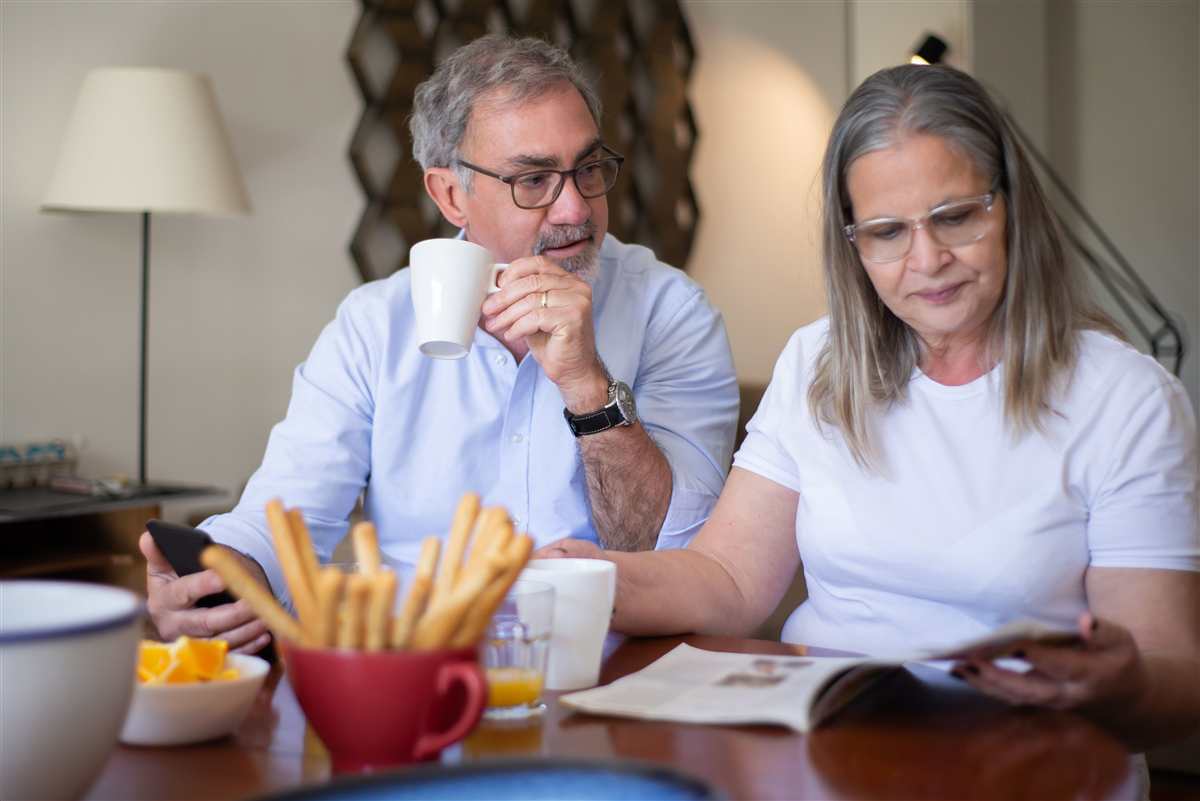
The most important relationship in retirement isn’t the one you left at the office. It’s the one across the breakfast table. I’m still learning. Some mornings are better than others. But I’m here now. Every day. Not leaving on Monday.
That counts for something.
If this landed with you, there’s more inside.
Get the Free Guide — The 5 Keys to Retirement Happiness →Keep well,
Farook

Take this with you
The Presence Practice
Three minutes, morning and evening, to arrive in your own day.
Download the free PDF →Stay a little longer
It was a Thursday afternoon when the silence in my house got so loud it startled me. Eight months retired, and I hadn’t had a real conversation in three days.
The kettle question
“What did retirement change across your breakfast table?”
The comment box is just below — I read every one.
Leave a Reply